
First-time cruise tips: how embarkation day actually goes
Published by CruiseDayGuide · Updated September 22, 2026 · sources checked September 22, 2026
Embarkation day is a sequence with two hard deadlines in it: a check-in cutoff — Royal Caribbean's strictest wording is checked in and aboard 90 minutes before port operations close, which can fall well before the ship sails — and the Final Boarding time printed on your own boarding pass. Everything else first-timers worry about, from the enforced arrival window to the cabin that is not ready and the suitcase that arrives after sailaway, is a comfort question one carry-on solves.
These policies are not uniform across the industry, and times vary by ship, by port and by sailing, so check your own line's page and your own boarding pass before you plan around any figure here.
Almost every list of first-time cruise tips is about the cruise. Bring a lanyard, book the specialty restaurant, don't overpack. None of it helps on the one day that actually goes wrong for people: the day you board. Embarkation day is a sequence with hard deadlines in it, run by a terminal that answers to a manifest and a ship that leaves without you.
Nobody sends you that sequence in order. Your cruise line sends you a boarding pass with a time on it and assumes you know what the time means. This page is that sequence, built from what the lines themselves publish, with each rule attributed to the line that publishes it — and where a line's own pages contradict each other, which happens more often than you would like, we say so and tell you which number to plan against.
Bags to a porter
porters take them before check-in opens
Your arrival window
the slot on your boarding pass
Aboard
lunch first; staterooms open early afternoon
Final boarding → sailaway
the deadline printed on your pass
Times vary by line, port and sailing — the window and deadline on your own boarding pass govern the day.
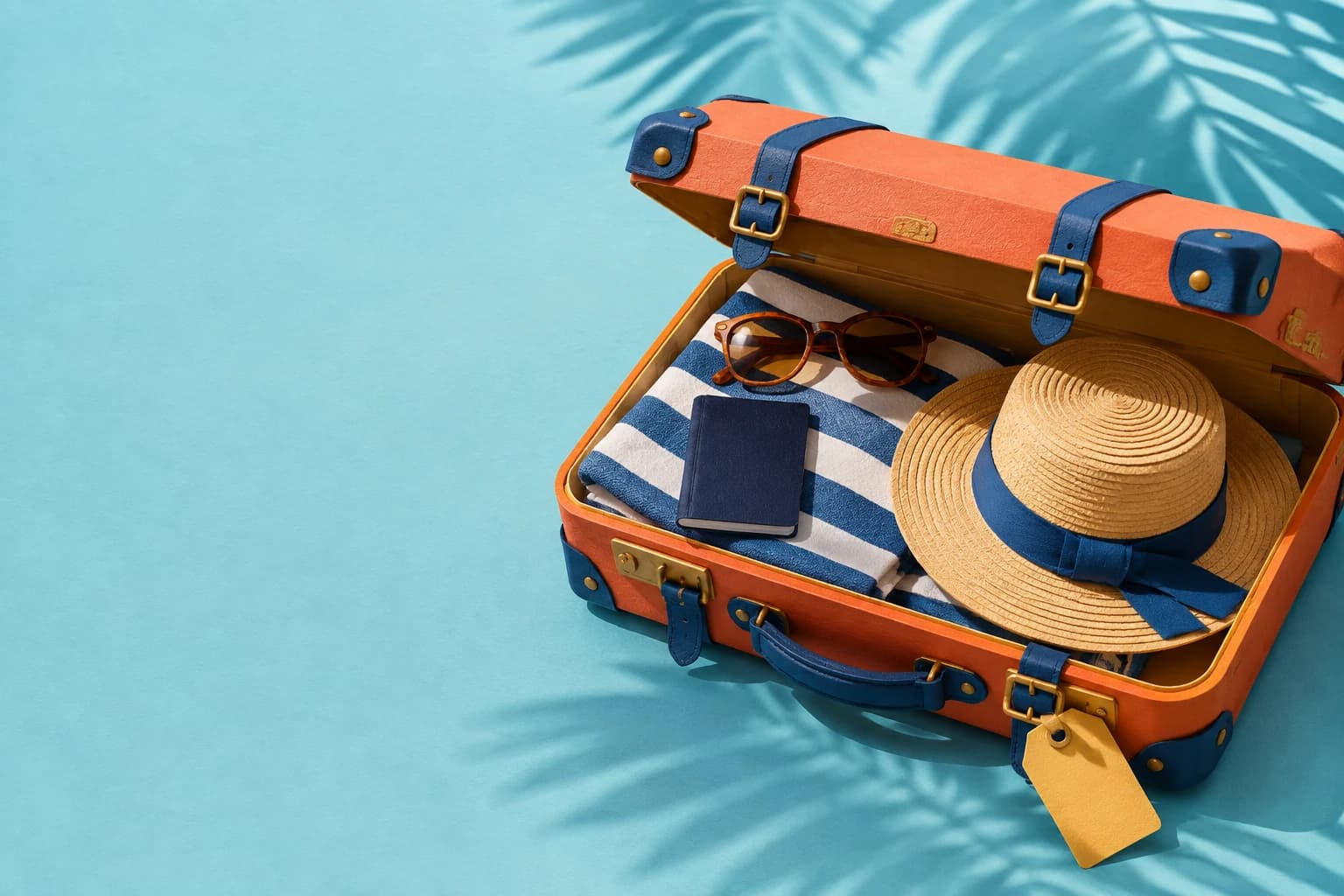
The carry-on bag this page describes
This page argues that one bag has to make your first six hours self-sufficient, because the cabin is not open and the suitcase is not coming. These are the two things in it worth buying rather than borrowing.
As an Amazon Associate I earn from qualifying purchases. How we make money
- Phone charger and portable batteryNamed in the day-one bag on every version of this list, including Royal Caribbean's own.Check price on Amazon
- Sunscreen (reef-safe)The pool deck is the point of boarding early, and it is the one thing the ship charges most for.Check price on Amazon
Pick an item to pull its rules to the top of the page — everything else folds away rather than disappearing.
Embarkation day in the order it happens
Six moments, in sequence, with what each one demands of you. Every rule and figure here was read on a cruise line's own site on the dates in the sources, and each is attributed to the line that publishes it. The right-hand column is ours: the mistake we see first-timers make at that step.
| Option | When | What actually happens | What you need in hand | The first-timer mistake |
|---|---|---|---|---|
| Your terminal arrival window | WhenA slot you pick during online check-in, running from late morning through the afternoon | What actually happensCarnival calls it an Arrival Appointment and says appointments are capacity controlled to minimise wait times; Royal Caribbean sets your boarding time during app check-in and prints it on your mobile boarding pass | What you need in handA boarding pass. Carnival states plainly that one is required to gain access to the terminal | The first-timer mistakeTurning up three hours early to beat the crowd. Royal Caribbean says guests who arrive early will not be able to begin boarding |
| Check-in and security screening | WhenInside your window, in the terminal building, before you see the ship | What actually happensCarnival says guests must present their boarding pass, picture ID and citizenship documents, and that bookings made within 24 hours of sailing require a secondary screening | What you need in handPassport or accepted proof of citizenship, photo ID, boarding pass, and the card you registered for onboard spending | The first-timer mistakeHanding the porter the bag your passport is in. Royal Caribbean says to keep travel documents in your hand luggage because they are presented at check-in |
| Walking onto the ship | WhenWhen your group is called. Virgin Voyages says boarding generally begins at 2:15pm | What actually happensYou cross the gangway into a ship that is already serving lunch. Carnival says lunch runs on Lido Deck from boarding until the safety briefing begins | What you need in handYour ship card or the line's app, and the small bag you kept with you | The first-timer mistakeJoining the embarkation photo queue at the exact moment the buffet is empty and every good deck chair is free |
| Cabin access and checked bags | WhenCabins open in the early afternoon. Bags come later, sometimes much later | What actually happensCarnival says guests arriving before 1:30pm usually check bags with a porter and enjoy lunch before access to their stateroom is granted; Royal Caribbean says luggage may arrive after the sailaway | What you need in handA carry-on holding medication, swimwear, sunscreen and a change of clothes | The first-timer mistakeSitting in the cabin waiting for a suitcase that is still on a cart three decks down |
| The safety briefing | WhenBefore the ship sails. Every line, every sailing, no exceptions | What actually happensOn most major lines you watch a safety video in the app or on the cabin TV, then check in at your assigned station; Norwegian still describes a drill that takes place right before the vessel departs and lasts 30 to 40 minutes | What you need in handYour phone or cabin TV, and your ship card for the crew to scan | The first-timer mistakeLeaving it to the last minute. Virgin Voyages tells sailors to do it early so it does not interrupt dinner or Sail Away |
| Sail away and the first dinner | WhenLate afternoon into the evening, after final boarding closes | What actually happensThe ship takes in its lines and dinner service starts. Royal Caribbean gives you a choice of traditional early or late seating or My Time Dining | What you need in handYour dining assignment, which Royal Caribbean prints on your SeaPass card | The first-timer mistakeAssuming a dining problem can be sorted out on day three. Royal Caribbean says to ask the Maitre d' on embarkation day |
Every policy in this table is attributed to the line that publishes it, and the lines genuinely differ: an arrival rule that is strict at Carnival is worded differently at Royal Caribbean, and Norwegian still describes a scheduled drill where Royal Caribbean and Carnival describe an on-demand one. Check your own line's page and your own boarding pass before you plan around any row here, because times vary by ship, by port and by sailing.
Why the terminal will not let you in early
A cruise terminal is not a first-come, first-served building. It runs on appointments, and the appointment is enforced at the door.
A federal manifest deadline, a security screening queue with a fixed throughput and a waiting room with a fixed number of chairs all collide on the same morning, and the arrival window is how the terminal keeps the three apart.
- Choose your own Arrival Appointment during online check-in rather than letting Carnival assign you one.
- Check both cabins if your party is split. Carnival selects appointments at the stateroom level, which is how two halves of one family end up with two different arrival times.
- Take the next slot available if your preferred one has already closed, which is what Carnival tells you to do.
- Turn up hours early to beat the crowd. It does not get you on the ship sooner; it gets you a longer wait in a room with fewer chairs.
- Leave the appointment unpicked. Carnival then assigns one and emails it on the morning of departure, along with the boarding pass you need at the terminal door.
- Build the day around the earliest slot. The earliest slots are the first to close.
- Carnival: online check-in and Arrival Appointment selection close at midnight eastern time the night before you sail.
- Carnival: appointments open within 14 days of sailing and are capacity controlled to minimise wait times, so popular slots close.
- Carnival: appointments are chosen per stateroom, so a group in two cabins can end up with two times.
- Royal Caribbean: arrive early and you will not be able to begin boarding; arrive late and you may be pushed into a later group.
- A boarding pass is what gets you through the terminal door, not a booking confirmation.
Where this comes from
The manifest requirement, the midnight deadline, the 14-day window and the capacity-control wording are all quoted from Carnival's own Online Check-in and Arrival Appointment page; the early and late arrival wording is from Royal Caribbean's port arrival FAQ. Both were read on the date in the sources below.
What actually happens at check-in
Check-in is shorter than you expect, and how short depends entirely on what you did before you left home.
The documents are the part that is not negotiable, and where you put them is the instruction people break. You reach the kerb, a porter offers to take the heavy bags, and the passports go up the ramp zipped into a suitcase lid — a problem you cannot solve from the check-in line. Sort them into a bag that never leaves your shoulder before you get out of the car.
- Complete app check-in at least three days before you sail, which is Royal Caribbean's own advice.
- Upload your photo when the app asks. Royal Caribbean runs facial recognition for expedited boarding at several of its terminals, it turns document verification into a walk-past, and it is free.
- Finish at the pier at least two hours before the published sailing time if you never managed the app.
- Hand the porter the bag your passport is in. Royal Caribbean wants travel documents in hand luggage precisely because they are presented at the desk.
- Rely on finding a signal in the queue. Print or save the boarding pass before you leave for the port.
- Royal Caribbean: check in on the app until 8am on sail day, or on the website up to 48 hours before.
- Royal Caribbean: app check-in produces your arrival time, health questionnaire, safety briefing access and SetSail Pass.
- Carnival: bring boarding pass, picture ID and citizenship documents, including any visas.
- Carnival: book within 24 hours of sailing and you will get a secondary screening.
- Royal Caribbean: a valid passport or other acceptable proof of citizenship, kept in hand luggage.
Where this comes from
Check-in timings, the SetSail Pass and the safety-briefing step are quoted from Royal Caribbean's check-in FAQ and its pre-cruise guidance; the document list and the 24-hour secondary screening rule are from Carnival's Embarkation and Departure page. All read on the dates in the sources below.
Your cabin is not ready, and neither are your bags
Two facts account for most of the low-level misery of day one, and both are easy to design around once you know them. You board before your cabin opens, and your checked bags are on a slower schedule than you are.
What follows from both is one carry-on that makes your first six hours self-sufficient. Royal Caribbean's own pre-cruise checklist recommends nearly the same bag, and its first-timer guide suggests a small tote with swimsuit and sunscreen so you can use the ship immediately.
- Pack medication in its original packaging, swimwear, sunscreen, a change of clothes, chargers and your travel documents in the bag that stays with you.
- Eat lunch and walk the ship while the cabin is shut, which is the sequence Carnival designs the early arrival window around.
- Sit in the cabin waiting for a suitcase that is still on a cart three decks down.
- Arrive inside the last two hours before departure expecting a porter. Carnival closes checked baggage service then, and the bags become yours to carry up the gangway.
- Carnival: guests arriving before 1:30pm typically eat lunch on Lido before stateroom access is granted.
- Royal Caribbean: your SeaPass card waits outside the stateroom once cabins become available.
- Royal Caribbean: checked luggage may arrive after the sailaway; the delivery window is posted in the Cruise Compass on board.
- Virgin Voyages: cabin readiness varies by sailing, so plan on exploring the ship first.
- Carnival: checked baggage service closes two hours before published departure, after which you carry your own bags.
Where this comes from
The 1:30pm and baggage-cutoff rules are from Carnival's Embarkation and Departure page; the luggage timing and SeaPass detail are from Royal Caribbean's luggage FAQ and first-time guide; the cabin-readiness wording is Virgin Voyages'. All read on the dates in the sources below.
The one appointment on day one you cannot move
Everything else on embarkation day is flexible. The safety briefing is not: every line on this page describes it as a legal requirement rather than a courtesy, and Carnival says it must be conducted by all guests before sailing.
The good news nobody tells first-timers is that the format changed. On Royal Caribbean and Carnival there is no longer a single announcement that empties the pool deck — you complete it on your own schedule, in three steps.
Watch the life jacket instructions video
The first of Royal Caribbean's three steps, in the app or on your cabin TV. Royal Caribbean's app check-in gives you access to the briefing so you can complete it before you reach your assembly station.
Listen to the emergency horn
The second step in the same sequence.
Check in at your muster station
Royal Caribbean lists the station in the app or on your SeaPass card; Carnival prints it on your boarding pass, Sail and Sign card or cabin key. A crew member verifies you completed the first two steps, and on Carnival demonstrates how to put on a lifejacket.
- Do it as soon as you board. Virgin Voyages says exactly that, and the ship cannot sail until everyone is accounted for.
- Leave it to the last minute and become the party being reminded about it during sail away, or the one whose dinner it interrupts.
- Carnival: cites SOLAS Chapter III, Regulations 19.2.2 and 19.2.3, which require a passenger safety briefing whenever new passengers embark, given immediately before sailing or immediately after.
- Royal Caribbean: an international SOLAS requirement enforced by the Coast Guard.
- Norwegian: its life boat drill is required by International Maritime Law and the United States Coast Guard.
- Virgin Voyages: watching the muster video and attending the drill is a legal requirement, in those words.
Where this comes from
SOLAS regulation numbers and the self-mustering description are quoted from Carnival's Safety Briefing page; the three-step eMuster process from Royal Caribbean's muster FAQ; the drill length from Norwegian's own FAQ; the legal-requirement wording from Virgin Voyages' embarkation guide. All read on the dates in the sources below.
Lunch, sail away, and getting the first dinner right
Between boarding and dinner there is a stretch of afternoon that first-timers tend to waste standing in queues, and it is the most pleasant part of the day if you use it.
The one decision inside it that is hard to undo later is dinner. Royal Caribbean's dining FAQ sets out two systems, and which one you are in is already printed on your SeaPass card.
Eat before you wanderOn boarding
Carnival serves lunch on Lido Deck from boarding until the safety briefing begins, which is a narrower window than people assume. Wash your hands with soap and water before you eat, not only at the sanitizer station by the buffet door: the CDC's norovirus guidance says hand sanitizer alone does not work well against norovirus and is not a substitute for washing.
Learn the ship while it is half emptyThe afternoon
Royal Caribbean's first-timer guide points new cruisers at the Windjammer Cafe and its casual counters, and suggests using the app's deck plans. Families register children at the first-day open house at Adventure Ocean rather than in a queue on day two.
Sort dinner with the Maitre d'Embarkation day
Royal Caribbean says changes to your dining assignment are requested from the Maitre d' on embarkation day. The desk is easy to find in the afternoon and impossible to get near on the second night.
Be on deck for sail awayLate afternoon
Royal Caribbean and Virgin Voyages both build their day-one advice around being outside when the shoreline starts moving.
- Royal Caribbean: traditional dining puts you in one of two assigned seatings, early or late.
- Royal Caribbean: My Time Dining is any time during dinner hours, subject to availability, with reservations strongly recommended.
- Carnival: the first night at sea can be the best night for a specialty restaurant, when the main dining room is at its busiest.
Where this comes from
Lunch timing and the specialty-restaurant suggestion are from Carnival's own pages; the dining systems, SeaPass card detail and Maitre d' instruction from Royal Caribbean's dining FAQ and first-time guide; the handwashing point from the CDC's norovirus prevention page. All read on the dates in the sources below.
The deadlines that can end a cruise before it starts
Two numbers are worth memorising, because everything else on this page is a comfort question and these are not: your check-in deadline and final boarding.
Royal Caribbean words the first of them three different ways on three of its own pages. When a line's pages disagree, plan against the strictest version. Carnival's final boarding time is not a calculation at all — it is printed on your document, so read it rather than estimating it.
- Read the Final Boarding time off your own boarding pass rather than estimating an hour before departure.
- Fly in the day before and sleep near the port, so the morning is short — and treat a drive of more than an hour or two the same way, because a breakdown or a closed interstate ends the same way a delayed flight does. The cost of the alternative is one hotel night, and every port guide on this site has a hotel section written for exactly that night.
- Fly in on embarkation day. A delayed flight has no recovery path when the deadline is a ship's departure, and the terminal cannot hold the manifest for you.
- Plan against the loosest of the three check-in figures when the strictest one covers you for all three.
- Royal Caribbean: fully checked in and on board no later than 90 minutes prior to port operations closing, in its port arrival FAQ.
- Royal Caribbean: checked in no later than 90 minutes prior to the scheduled sailing time, in its check-in FAQ.
- Royal Caribbean: a third page says 60 minutes, sometimes 90.
- Royal Caribbean: if you did not check in on the app, finish at the pier at least two hours before the published sailing time.
- Carnival: on board by the Final Boarding time printed on your boarding pass, or you will not be permitted to sail.
- Carnival: checked baggage service closes two hours before published departure.
Where this comes from
All three of Royal Caribbean's check-in deadline phrasings and Carnival's Final Boarding wording were read on the lines' own pages listed in the sources below. The advice to fly in a day early is ours, not a cruise line policy.
Questions first-time cruisers ask
What time should I arrive at the cruise terminal on embarkation day?
Arrive inside the window your line gave you, not before it. Carnival asks guests to select an Arrival Appointment during online check-in and says appointments are capacity controlled to minimise wait times, with one assigned automatically and emailed on the morning of departure if you did not pick one. Royal Caribbean sets your boarding time during app check-in and prints it on your mobile boarding pass, and says guests who arrive early will not be able to begin boarding while those who arrive late may need to wait for a later group. Turning up hours early does not get you on the ship sooner; it gets you a longer wait in a room with fewer chairs.
Why isn't my cabin ready when I board the ship?
Because the crew is still turning over several thousand cabins from the cruise that ended that morning. Carnival describes the intended sequence directly: guests scheduled to arrive before 1:30pm usually check their bags with a porter so they are free to enjoy lunch on Lido Deck before access to their stateroom is granted. Royal Caribbean says that once staterooms become available your SeaPass card will be waiting outside your door, and Virgin Voyages tells sailors that cabin readiness varies by sailing and to plan as though they will explore the ship first. Eat lunch, walk the ship, and treat the cabin opening as a mid-afternoon event rather than a boarding one.
When will my checked luggage arrive at my stateroom?
Later than you want, and no line commits to a clock time. Royal Caribbean says that due to the high volume of luggage on embarkation day your bags may arrive after the sailaway, and that the delivery window for your sailing is posted in the Cruise Compass once you are on board. That is why every line's first-timer advice, and ours, is the same: carry a bag that covers your first six hours. Medication in its original packaging, swimwear, sunscreen, a change of clothes, chargers and your travel documents. If the suitcase turns up early, you have lost nothing.
What documents do I need at cruise check-in?
Carnival states that at check-in guests must present their boarding pass, picture ID and citizenship documents including any necessary visas, and adds that anyone who booked within 24 hours of sailing will undergo a secondary screening. Royal Caribbean asks for a valid passport or other acceptable proof of citizenship, and specifically tells guests to keep all travel documents in their hand luggage because they must be presented at the terminal. Carnival also notes that a boarding pass is required to gain access to the terminal at all, so print or save it before you leave for the port rather than relying on finding a signal in the queue. Carnival also says that if your name differs across your documents because of marriage, divorce or a legal name change, you need the certificate or court document that bridges the names, and that failing to bring it could mean denial of boarding. Royal Caribbean, Carnival and Norwegian want a passport to stay valid for six months after the cruise ends. Carnival adds that a mobile or digital version of a photo ID is not acceptable, so bring the physical card. Royal Caribbean asks a green-card holder for the original Permanent Resident Card, not a copy, plus a valid passport from their country of citizenship. When a child sails without their legal guardian, Royal Caribbean requires the accompanying adult to show a notarized form signed by the guardian, and Carnival strongly recommends a signed letter from any parent who is not sailing.
Do I have to do the muster drill on my first cruise?
Yes, on every line and every sailing. Carnival says the safety briefing must be conducted by all guests before sailing, and cites SOLAS Chapter III, Regulations 19.2.2 and 19.2.3, which require a passenger safety briefing whenever new passengers embark, immediately before or immediately after sailing. Royal Caribbean describes it as an international SOLAS requirement enforced by the Coast Guard, and Norwegian says its drill is required by International Maritime Law and the United States Coast Guard. The format has changed on most large lines: rather than one mass assembly, you watch a safety video in the app or on your cabin TV, then check in at your assigned station on your own schedule. Do it as soon as you board.
What happens if I miss my final boarding time?
You do not sail. Carnival's wording is that all guests must be on board by the Final Boarding time printed on the boarding pass or they will not be permitted to sail, and Royal Caribbean says guests must be fully checked in and onboard no later than 90 minutes prior to port operations closing, a stricter cutoff than the 90 minutes before sailing its check-in FAQ also prints; late arrivals are not permitted to sail. Because final boarding is printed on your document rather than calculated from the departure time, read the number on your own boarding pass instead of assuming an hour before departure. It is also the reason not to fly in on the morning of a cruise: a delayed flight has no recovery path against a ship's departure.
Plan the rest of your cruise day
Where these facts come from
- help.carnival.com — Online Check-in and Arrival Appointment — checked 2026-08-09
- help.carnival.com — Embarkation and Departure — checked 2026-08-09
- help.carnival.com — Safety Briefing, Muster Station Drill — checked 2026-08-09
- carnival.com — What You Should and Shouldn't Do on Embarkation Day — checked 2026-08-09
- carnival.com — Travel Documentation: U.S. Citizens — checked 2026-09-22
- royalcaribbean.com — When should I arrive at the cruise port terminal? — checked 2026-09-22
- royalcaribbean.com — When can I check-in for my cruise? — checked 2026-09-22
- royalcaribbean.com — What should I do before my cruise? — checked 2026-08-09
- royalcaribbean.com — When can I expect to get my luggage once onboard? — checked 2026-08-09
- royalcaribbean.com — First Time Cruise Tips — checked 2026-08-09
- royalcaribbean.com — What dining times are available at the Main Dining Room? — checked 2026-08-09
- royalcaribbean.com — Travel Documents — checked 2026-09-22
- royalcaribbean.com — Know Before You Go — checked 2026-08-09
- royalcaribbean.com — What is a muster drill? — checked 2026-08-09
- ncl.com — What is the timing of the mandatory safety drill? — checked 2026-08-09
- virginvoyages.com — Embarkation Guide — checked 2026-08-09
- virginvoyages.com — Your First Day On Board — checked 2026-08-09
- cdc.gov — How to Prevent Norovirus — checked 2026-08-17
Research sources and cruise line policy wording can change after they are checked. Every fact here carries the date it was read from an official source, so you can judge how fresh it is. A claim that could not be verified is left out rather than repeated. Recheck current official guidance before you pack, plan, or travel.